You fill a glass from the kitchen faucet, take a sip, and notice something slightly unusual. Maybe the water tastes a little different, or perhaps your drinking glasses have developed those familiar cloudy marks that never seem to disappear.
Most of us don’t think much about water quality until something catches our attention. It’s easy to assume that clear water must be perfectly fine, but appearances don’t always tell the whole story.
Whether your property receives municipal water or relies on a private well, understanding its quality can help you make better decisions about filtration, softening, and everyday household maintenance.
And fortunately, improving your water doesn’t have to involve complicated equipment or unnecessary spending. It begins with asking the right questions.
Why Testing Your Household Water Is a Smart First Step
Before purchasing a water treatment system, it’s worth finding out what your water actually contains.
Professional in-home water testing can help identify certain water characteristics, such as hardness, pH, and selected dissolved substances, depending on the equipment and methods used.
This initial assessment may explain why mineral deposits keep appearing around your faucets or why your water has an unusual taste.
However, basic household testing has limitations.
Some potentially harmful contaminants cannot be reliably identified using simple test strips or portable testing equipment. Concerns involving bacteria, lead, nitrates, or other specific substances may require analysis from an appropriately accredited laboratory.
Private well owners should be especially attentive because they are generally responsible for monitoring their own water supplies.
Municipal water customers can also review local water quality reports and investigate concerns related to their property’s plumbing.
Reliable information helps prevent homeowners from investing in equipment that doesn’t address the actual problem.
How Whole-House Filtration Can Improve Everyday Living
Think about how often your household uses water. From the morning shower to the evening dishwasher cycle, it’s involved in practically everything.
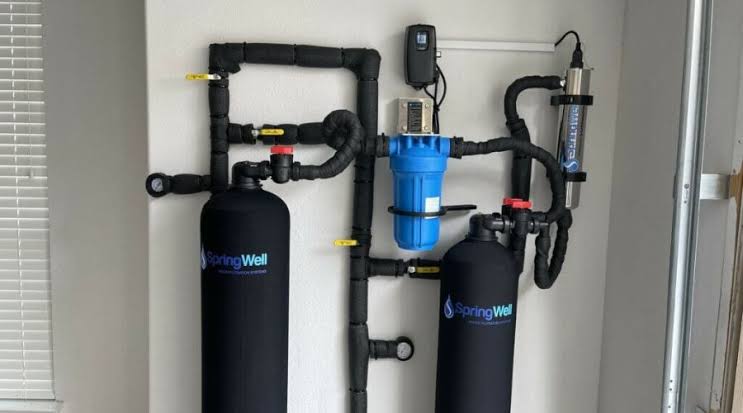
Properly selected whole-home filtration systems treat incoming water near the main supply line, allowing selected improvements to benefit multiple household fixtures and appliances.
These arrangements can be useful when water quality concerns extend beyond the kitchen.
For example, sediment entering your plumbing may gradually accumulate inside faucet aerators, appliance inlet screens, and other components.
A suitable centralized sediment filter can help capture suspended particles before they reach those locations.
Other systems use activated carbon to reduce selected substances responsible for unpleasant tastes and odors.
Depending on your water conditions, potential benefits may include:
- Reduced suspended particles throughout connected plumbing.
- Improved water clarity when sediment causes cloudiness.
- Reduction of certain unwanted tastes and odors.
- Less particulate accumulation inside appliance inlet screens.
- Convenient centralized filtration maintenance.
However, whole-house filtration isn’t a universal solution.
If excessive hardness is creating chalky deposits, conventional water softening may be necessary. Standard sediment and carbon filters generally don’t remove dissolved calcium and magnesium effectively.
Choosing the right treatment method makes all the difference.
Finding the Right Drinking Water Solution for Your Kitchen
Some homeowners are perfectly satisfied with their water for bathing and cleaning but want additional treatment for beverages and food preparation.
That’s where dedicated drinking water filtration can offer a practical alternative to treating the entire household supply.
Under-sink systems are particularly popular because they generally keep filtration components hidden inside the kitchen cabinet while providing convenient access through a dedicated faucet.
Activated carbon filters may help reduce certain unpleasant tastes and odors, including those associated with chlorine.
Reverse osmosis systems go further by using membrane technology to reduce many dissolved substances.
Which option makes sense depends on your water quality concerns.
If your primary complaint is a noticeable chlorine aftertaste, an appropriate carbon filter might be sufficient.
However, if testing identifies particular dissolved contaminants, a system with verified reduction capabilities may be more suitable.
It’s worth checking independent performance certifications rather than assuming every filter removes the same substances.
Can Better Water Help With Household Cleaning?
Anyone who regularly cleans a bathroom knows how frustrating recurring mineral deposits can be.
You scrub the shower door, polish the faucets, and finally get everything looking spotless. A few days later, the same residue begins appearing again.
Hardness minerals are often responsible for these stubborn deposits.
Conventional water softeners reduce dissolved calcium and magnesium through ion exchange, helping limit future hardness-related scale formation.
Softer water may also improve soap and detergent performance, making certain cleaning tasks easier.
It’s important to remember that a softener doesn’t replace contaminant-specific filtration.
The two technologies serve different purposes, and some households may benefit from using both.
Choosing Equipment That Fits Your Lifestyle
A family with several bathrooms and frequently operated appliances has different water requirements from someone living alone.
Before investing in treatment equipment, consider household consumption, incoming water pressure, available installation space, and long-term maintenance costs.
An undersized system may create unnecessary pressure restrictions during busy periods.
Ask about replacement cartridges, equipment servicing, water efficiency, and warranty coverage.
A knowledgeable professional should explain what each treatment component accomplishes without relying on exaggerated promises.
Understanding the operating costs beforehand can also help avoid unpleasant surprises.
Regular Maintenance Keeps Your Investment Working
Installing filtration equipment is only the beginning.
Cartridges eventually require replacement, treatment media may lose effectiveness, and water softeners need appropriate servicing.
Follow manufacturer recommendations and keep a simple record of maintenance dates.
If unusual odors return or water pressure decreases unexpectedly, investigate the change rather than ignoring it.
Periodic testing can also help confirm that the selected treatment continues addressing your water quality concerns.
Make Better Water an Everyday Convenience
Improving household water quality isn’t about purchasing the most expensive filtration system available.
It’s about understanding what’s coming through your faucets and selecting equipment that genuinely addresses your needs.
Maybe that means fewer particles around your fixtures, better-tasting morning coffee, or less time cleaning hardness-related deposits.
These improvements might seem small, but they’re part of everyday life.
And when your water treatment system is properly selected and maintained, it’s one less household concern demanding your attention.